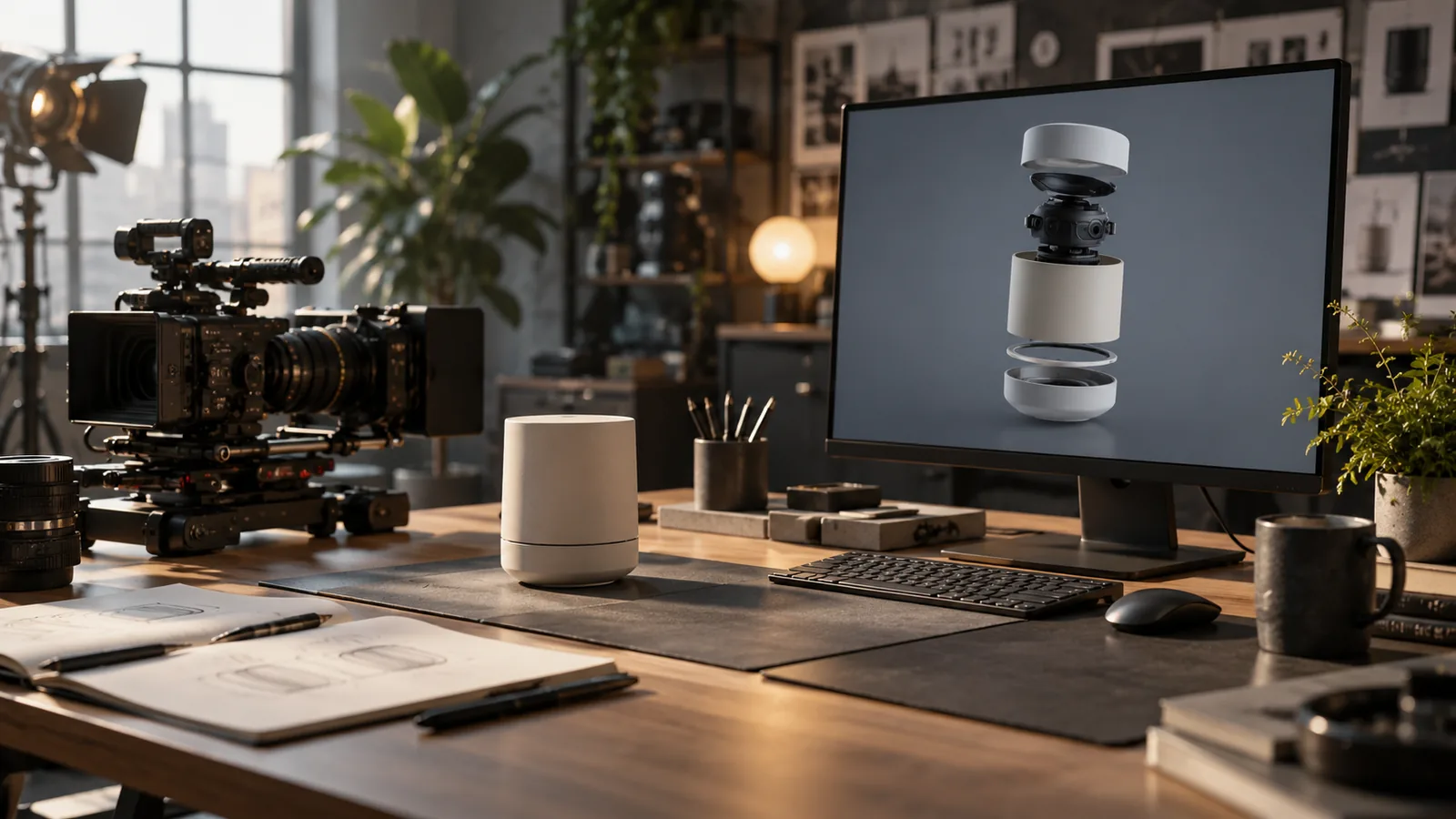
Choose live action when your viewer needs to see real people, a real place or the product working. Choose animation when the message needs a view that filming cannot easily provide, such as an internal mechanism, an abstract process or a designed world. Combine them when the explanation needs both. The right format follows the evidence your buyer needs.
A beautiful video can still leave the important question unanswered. Before choosing a style, finish this sentence: “After watching, our buyer should understand or believe ____.” Then decide what would make that conclusion credible on screen.
Start with what the viewer needs to see
If the question is whether a product fits into an actual workplace, footage of someone using it can make the context visible. If the question is how information moves through a system, a diagram in motion may explain the relationship more clearly than shots of an office.
For a product demonstration, distinguish visible operation from an illustration of what happens inside. Do not let an elegant animation imply that a capability has been demonstrated when it has only been depicted. Our product demo planning guide explains how to connect a buyer question with useful proof.
Write the same scene both ways
Before commissioning the production, describe one important moment as live action and as animation.
For the live-action version, identify the person, location, action and access required. Can the camera capture what the viewer needs to understand? Does the scene depend on a participant, a working product or a particular location being available?
For the animated version, identify what must be designed, supplied and approved. Do you have an accurate reference for the product or process? Who can verify that the illustration is correct? Which details need to be literal, and which are clearly a visual metaphor?
This comparison exposes the work behind the style. Bring it into pre-production before either approach becomes a commitment.
Compare scope, not assumptions about price
Do not choose animation simply because you expect it to be cheaper. Ask what each proposed approach requires: script development, design, assets, crew, locations, filming, animation, sound, revisions and delivery versions.
Compare proposals against the same audience, message and deliverables. A simple graphic explanation and a detailed character sequence are different assignments. So are an interview in one controlled location and a production with several locations and performers.
For a scope checklist, use our guide to comparing video production quotes. Request a project-specific estimate rather than treating a format as a price category.
Approve the decisions that are expensive to revisit
For animation, review the script, visual direction and planned sequence before asking the team to finish movement and detail. For live action, confirm what must be captured before the shoot. For a hybrid, decide how filmed and designed elements will connect.
Agree who approves technical accuracy, messaging and brand treatment. Our video approval workflow helps organize those decisions without sending conflicting feedback to the production team.
Plan what may change later
Will the interface, product, language or offer change? Tell the production partner what you expect to update and ask how the proposed approach accommodates it. Specify the versions and editable materials your agreement includes. Neither format makes future changes automatically simple or free.
Can a video use both animation and live action?
Yes. A filmed demonstration can establish the real context while animation explains a relationship the camera cannot show. Make the transition clear so viewers can distinguish observation from illustration. Discuss that combination with Bolt’s animation and motion graphics team.
What should I send to get a recommendation?
Send the buyer question, the product or service, available assets, visual references, deadline and intended channels. Explain what must be shown accurately and who can approve it.
Email brian@boltworldwide.com to discuss the approach. Choose the format that makes your message believable, then build the production around it.