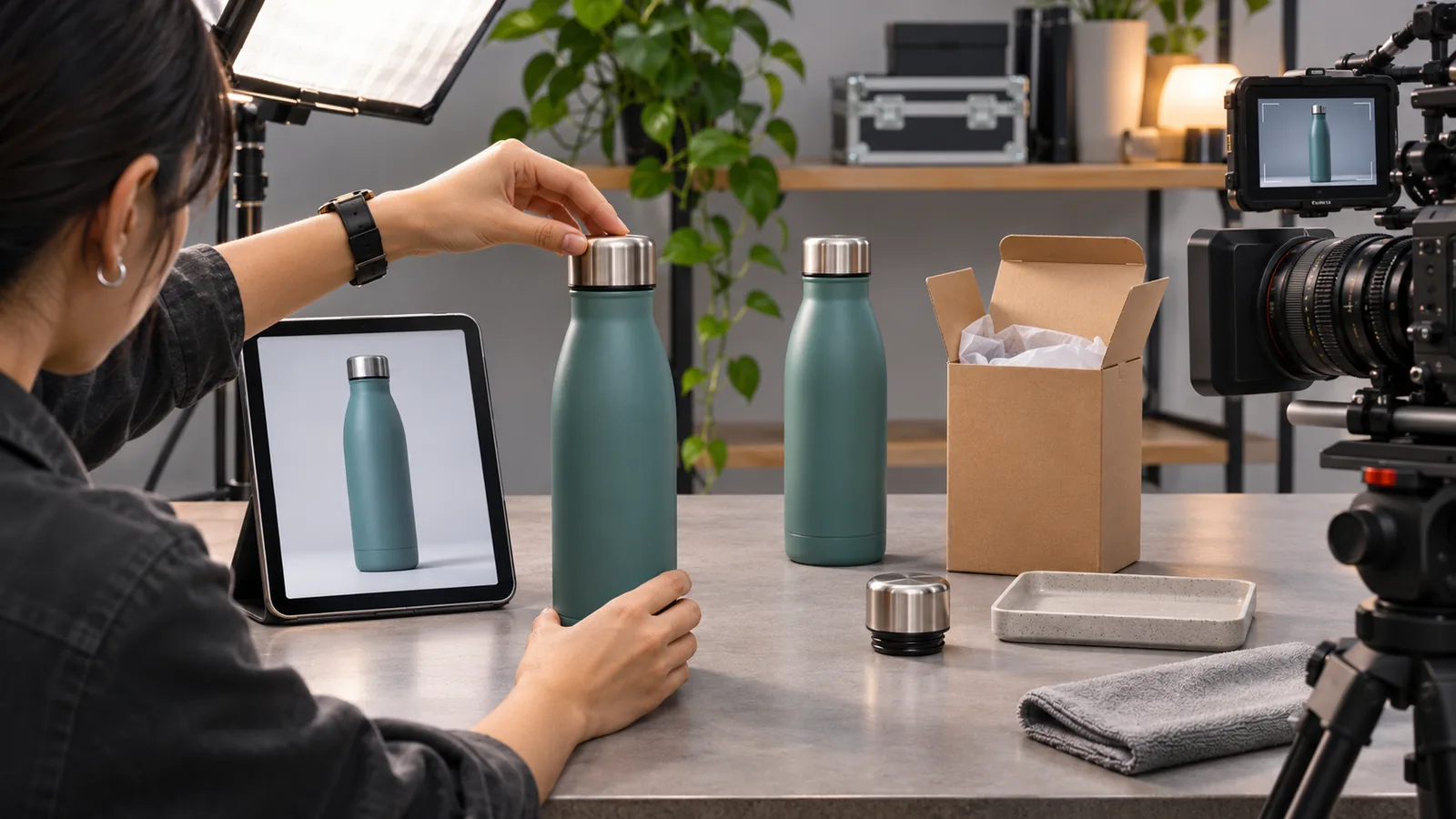
Prepare product samples for a video shoot by confirming the exact version to show, agreeing which units may be opened or used and documenting the condition needed for each planned scene. Arrange inspection and replacements with the production team before filming. A delivered box is not proof that the right product is ready for every shot.
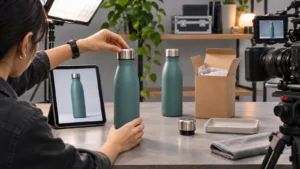
Illustrative generated image. This scene does not depict Bolt personnel, facilities or client work.
This guide concerns physical products, packaging and their state across takes. The product demonstration planning guide covers what the film should explain or demonstrate. Here the narrower question is whether the supplied objects can support that plan consistently and accurately.
Confirm which version belongs on camera
Identify the product, finish, size and packaging intended for the film. Ask the brand’s responsible contact to confirm whether these match the version viewers can actually obtain or whether the shoot concerns an unreleased product. Keep a prototype or provisional package clearly identified instead of letting its arrival make it the approved reference.
Check supplied artwork against the physical object. A current digital packaging file does not establish that the shipped sample carries it. Look at the actual label, visible wording and included components. Have the appropriate brand reviewers settle any claim or other specialist question; this article does not interpret labeling requirements.
Record the chosen version in the video production brief. If several variants will appear, name the differences that matter on screen. The producer needs to know whether a color change is an intentional alternate product or an accidental inconsistency between the items supplied.
Separate appearance units from units that will be used
Discuss how the product changes during the intended action. Opening a package, removing a protective layer, filling a container or assembling a component can alter its appearance. Decide which units need to remain untouched for particular views and which can be used for the demonstration.
Ask the production team to recommend quantities from the actual shot plan. There is no universal number of samples that fits every product. The answer depends on repeatability, wear, the actions being filmed and the practical ability to restore the required state between takes.
For a hypothetical reusable bottle, one view may need an unopened package while another needs the cap removed and the bottle filled. The same item may serve several views, but that should be a deliberate plan. Do not discover halfway through recording that the only intact seal was needed for a later scene.
Give sample arrival its own readiness check
Agree who receives the items, who inspects them and when an issue must be raised. Allow the production team to explain the lead time it needs. A parcel marked delivered may still be waiting in a receiving area, contain the wrong variant or show damage that matters in a close view.
Compare the arrived items with the agreed product reference. Note scratches, dents, missing parts, damaged packaging or mismatched labels. Ask the responsible people whether a concern affects filming and what remedy is appropriate. Do not assume retouching or a different camera angle will resolve every discrepancy.
Keep the inspection information connected to the actual unit. A reference photo and a simple identifier can help distinguish an accepted sample from one awaiting replacement. Use the company’s approved handling process and avoid placing a visible identification mark where it could enter the finished shot.
Describe the product state each scene requires
Continuity means keeping the relevant details consistent when separate takes are meant to show the same moment or sequence. For a product, that may concern cap position, fill level, assembly, placement or the condition of the packaging. Decide which details affect the story before treating every small difference as equally important.
Make an appropriate reference showing the intended state. Include enough context to understand orientation and the relationship between components. A close image of one detail may be useful alongside a wider reference showing the whole arrangement. Agree who maintains the record and how the crew will identify the current version.
Keep deliberate changes visible in the plan. A package that is opened during the action should look different afterward. The aim is not to erase every change, but to preserve the sequence the viewer is meant to follow. Record which state belongs before the action and which belongs after it.
Plan the reset before asking for another take
Walk through how the product returns to the starting state. Can it be refilled, reassembled or cleaned appropriately? Does the action consume material or permanently change a part? Ask the brand’s knowledgeable contact and the production team to settle practical handling requirements for the actual item.
For the invented bottle sequence, resetting may mean returning the cap and contents to the agreed starting condition. Another product may need a replacement component or a completely new sample. Let the action determine the reset plan rather than assuming that a spare item is interchangeable in every visible detail.
Assign responsibility for preparing the item between takes. Make sure the necessary material and an appropriate working area are part of the agreed arrangements. This is buyer preparation guidance, not a claim that Bolt automatically supplies product styling, props or a particular studio package.
Account for photographs and other planned uses
If still photography shares the production day, tell both teams which product states their images require. A pristine package may matter for a still image after the video sequence would ordinarily open it. Resolve that dependency in the schedule or sample allocation, rather than assuming both teams can use the same item at any moment.
The combined stills and video planning guide covers the wider coordination. Product preparation adds a concrete handoff: which unit is ready, what condition it must retain and what another activity would change. Share that information before either team commits to a sequence of work.
Bring these requirements into pre-production planning. If the plan depends on an unavailable variant or a sample that cannot arrive in time, identify what decision is needed. A revised scope should be agreed openly rather than hidden behind an unsuitable substitute.
Protect unreleased material and settle the final handoff
For an unreleased product, have the brand identify the permitted handling, viewing and sharing arrangements. Tell the producer which reference images may be circulated and which information should stay with the responsible contacts. A continuity photo is still an image of the product and may need the same care as other production material.
Agree what happens to samples afterward: return, retention, transfer to another team or another approved arrangement. Identify the contact who authorizes that decision and any handling instructions. Do not leave ownership of remaining items to an assumption made while clearing the location.
Email brian@boltworldwide.com with the product versions, intended actions, sample availability and delivery constraints. Discuss the film through Bolt’s commercial video production services. Clear preparation lets the creative conversation begin with the actual objects the camera will need to show.