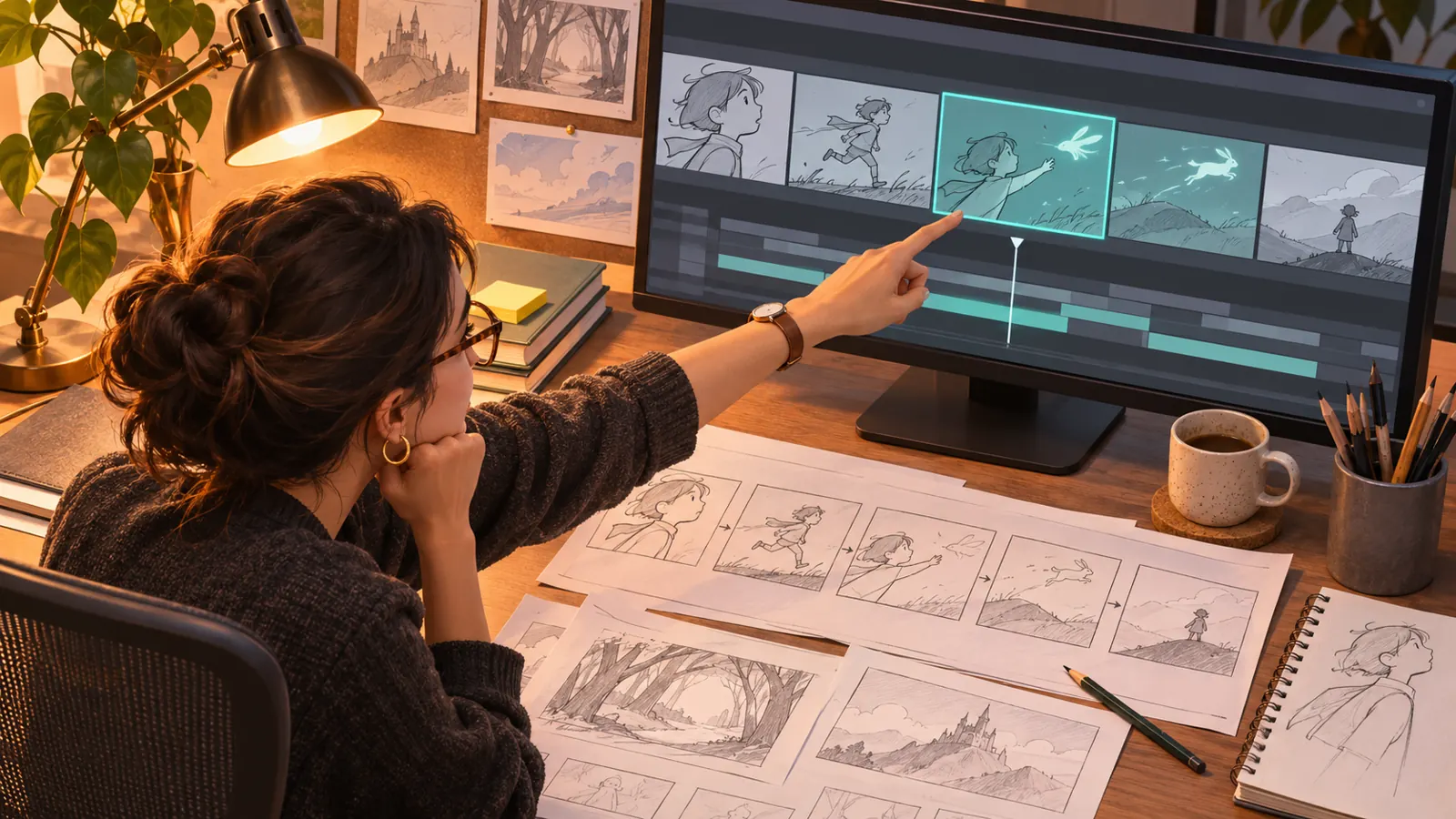
Approve an animatic when the sequence gives viewers enough time to understand the action, read essential labels and connect the narration to what they see. An animatic is a playable rough cut of the storyboard. Identify which timing and story decisions you can approve and which visual or audio details still need review.
Play the rough cut without stopping
Watch the animatic once at its intended speed. Avoid explaining the story to the reviewers before they watch. Ask them to describe the main point and name the first moment they had to catch up. A reviewer who can explain the story only after seeing the script can help pinpoint what is missing from the cut.
If you are still deciding what each scene should show, start with Bolt’s animation storyboard review guide. Review the animatic once the team can play a sequence and test what a viewer can understand in the time available.
Check when picture and narration meet
Watch for moments when the voice names something before the picture identifies it, or when the picture changes while the voice is still explaining it. Review a label at the point it appears. If the viewer has to study a new diagram and read a separate explanation at the same time, try staging those ideas in sequence.
Imagine a fictional animation showing how orders pass from a work queue to a shipping station. If the narrator explains an exception while the diagram is still introducing the normal route, test a brief hold on the normal route before showing the exception. Record a second rough pass and see whether the reviewer can tell the routes apart.
Use notes the editor can apply
Name the file version and identify the moment in playback. Describe what the viewer missed before suggesting how to fix it. A note that the destination label disappears before the route arrives gives the editor a specific problem. The fix could be a longer hold, an earlier label or a shorter read. Let the team test the least disruptive option.
If the rough voice track differs materially from the planned read, agree which sections need retesting. Clearly mark any provisional music, voice or artwork so reviewers can focus on the question the current version is built to answer.
Record what the approval covers
Write down whether you are clearing scene order, narration timing, label timing or a combination of those items. Name the decisions still open and who owns them. Ask the editor to replay changed scenes with their neighboring shots, since a timing change can affect the transition into the next idea.
If you are commissioning an explainer, see Bolt’s animation and motion graphics services or email brian@boltworldwide.com with the storyboard, draft narration and the decision the rough cut needs to resolve.