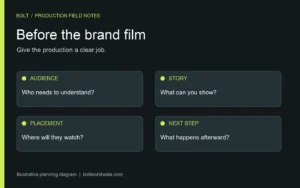
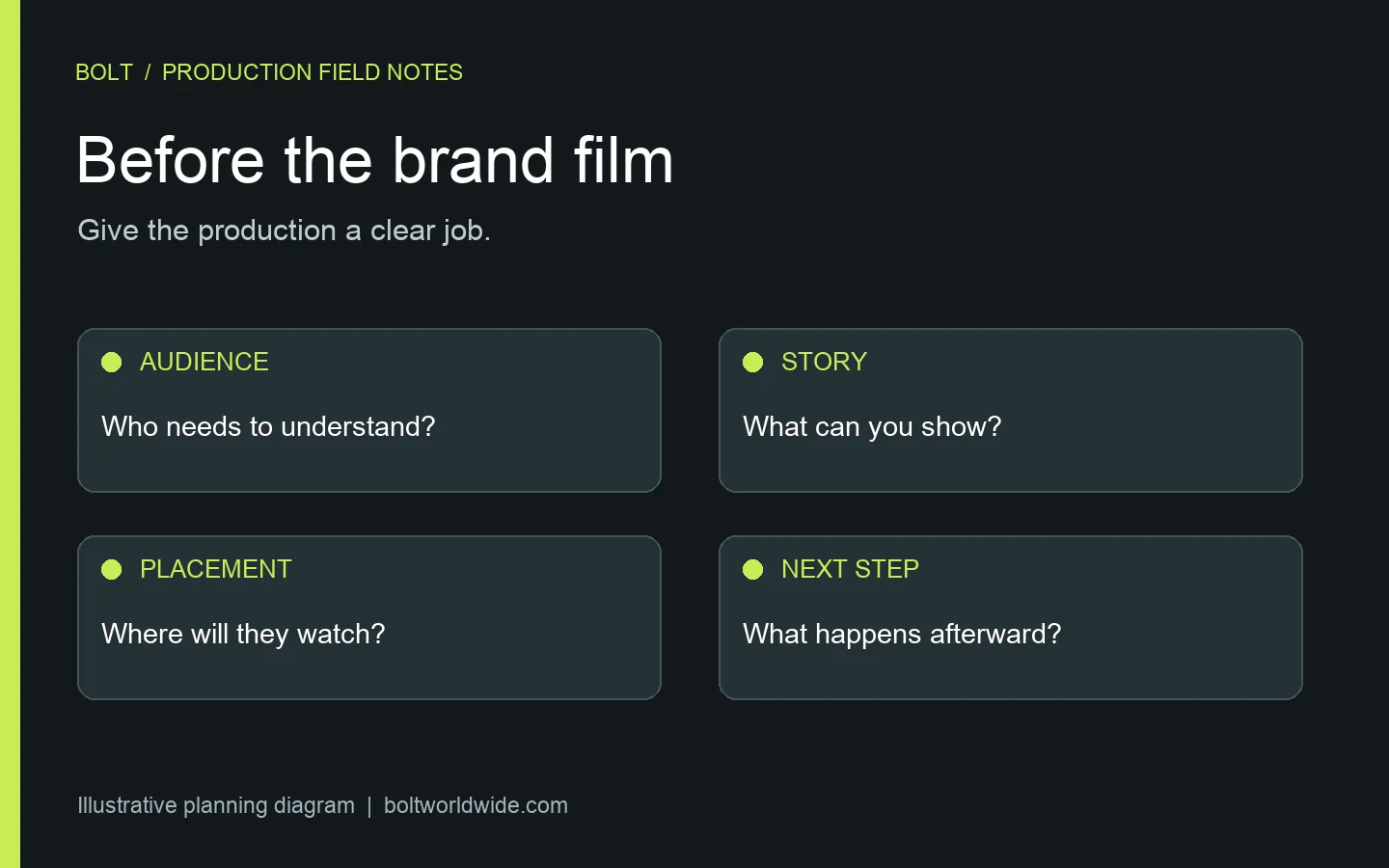
Commission a brand film when the viewer needs to understand what your company stands for, how it sees the world or why its work matters, and you have a specific story that can make that idea visible. Before asking for a treatment, name the audience, viewing context and next step. A request for a beautiful company video leaves too much undecided.
The first commissioning decision is the job the film needs to do. If the viewer needs a product explanation, a customer account or a current offer, describe that requirement before choosing the format. Several kinds of video can express a brand. Calling the project a brand film does not settle which one serves this assignment.
Write the question the film must answer
Complete a practical sentence: after watching, this audience should understand something specific about us that matters to their decision. Keep the sentence concrete enough that a reviewer could tell whether a proposed story addresses it.
A hypothetical manufacturer might want prospective partners to understand how its team responds when a project becomes difficult. That is a more usable starting point than asking to appear innovative. It suggests people, decisions and situations the production could investigate. It does not establish that those situations are available to film.
Put the intended understanding in your video production brief. Include what viewers already know and what they still need to learn. A familiar audience and a first-time visitor may need different context before the same story makes sense.
Separate identity from explanation and an immediate offer
A brand film can introduce a point of view. A demonstration can show what a product does. A campaign commercial can present an offer and a reason to act. These purposes can overlap, so agree which responsibility takes priority in this project.
For example, if sales conversations repeatedly stall because buyers cannot understand the workflow, review whether an explainer or product demonstration is the more useful assignment. Adding a sweeping company narrative may leave the original question unanswered.
If the team wants both a lasting introduction and a time-limited promotion, describe them as separate deliverables with distinct jobs. Ask what can sensibly share production material. Do not assume a shorter export of the main story will automatically explain the offer or fit the placement.
Name the place where someone will actually watch
Discuss the setting before debating a running time. A website visitor, a room at an event and someone encountering a social post arrive with different information and viewing conditions. Identify how the film will be introduced and what will appear around it.
Write down whether sound is likely to be available, what context must appear on screen and where the viewer can go next. Confirm the actual channel requirements with the people publishing the video. Build the delivery list around those uses rather than requesting every possible version without a reason.
Accessibility belongs in this discussion. The World Wide Web Consortium’s media planning guidance addresses the content, player and accessibility requirements as planning decisions. Agree which deliverables your audience and publishing environment need before production begins.
Find the story before buying the visual treatment
Ask what the team can show that makes the intended idea understandable. A person solving a problem, a choice with consequences or a revealing process may offer a story. A list of values and attractive locations is still material to develop, not a finished creative premise.
Identify which contributors, places and activities are confirmed. Separate real experience from a proposed staged scene or imaginative device. Those approaches can each serve a creative purpose, but reviewers need to know what they are approving and what remains an assumption.
Explore Bolt’s branded video content services with that story question in mind. For visual references, the Alberto Blanco director portfolio provides work to discuss in terms of tone and approach. A reference is a conversation starter, not a promise to reproduce another project’s access, assets or results.
Agree how the team will judge the proposal
Before inviting creative responses, name the people who can resolve the audience, factual and brand decisions. Ask them to agree on the main message and how it connects to the intended viewer. Unresolved disagreement at the brief stage is likely to reappear when reviewing a treatment.
Once a direction is proposed, use our brand film treatment review guide to connect its message to particular scenes. That is the next decision. First establish why this film is being commissioned and what the creative team needs to solve.
Keep the evaluation proportionate to the purpose. Publishing a film and recording views does not establish that viewers understood a company differently or that the film caused a sale. Discuss what can actually be observed with the team responsible for campaign measurement.
Can the same shoot support a brand film and commercial?
Possibly, if the creative and production plans cover both assignments. Bring the offer, placements, required versions and timing into the conversation early. Ask the team which footage can serve both purposes and where a different script, opening or setup is needed. Shared footage is a scope decision to verify, not an automatic saving.
What should we send before requesting a proposal?
Send the intended audience, the question the film should answer, likely viewing locations, available story material and the people who can approve it. Include timing and budget constraints so the response can address a real assignment. Distinguish confirmed access from ideas the team would still need to investigate.
Email brian@boltworldwide.com with those details to discuss a brand film. A clear reason to make the film gives the creative proposal something meaningful to solve.