Prepare a company history video by identifying the story you want to tell, locating the material that can support it and checking what the production team can actually use. Record the source, context and review status of each important item. Identify missing evidence and any specialist transfer work before the edit schedule depends on material nobody has opened or verified.
An anniversary gives the project a date, but it does not supply the story. A company-history film may help employees understand a turning point, explain a founding decision or preserve a particular account of the business. Choose the audience and purpose before gathering every photograph into a folder. This guide covers preparing archival material, a narrower decision than whether to commission a brand film.
Choose the question the history should answer
Ask what someone outside the project team should understand after watching. A chronology of milestones can be useful source material without being a complete creative idea. Look for the decision, change or relationship the film should explain. Then investigate which records and people can support that account.
For an invented manufacturing business, the subject might be how a particular customer problem changed its approach to product design. A founding photograph alone may establish the people involved, while a later drawing, interview or demonstration helps explain what changed. This is a hypothetical planning example, not a Bolt client story.
Use the production brief to state the audience, purpose, intended screening or publishing locations and deadline. Mark which story ideas have evidence and which are still questions. Avoid approving a script that depends on a striking moment before confirming whether the material supports it.
Locate the material before describing the edit
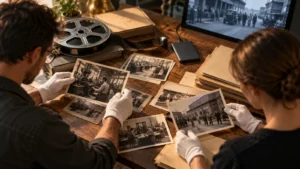
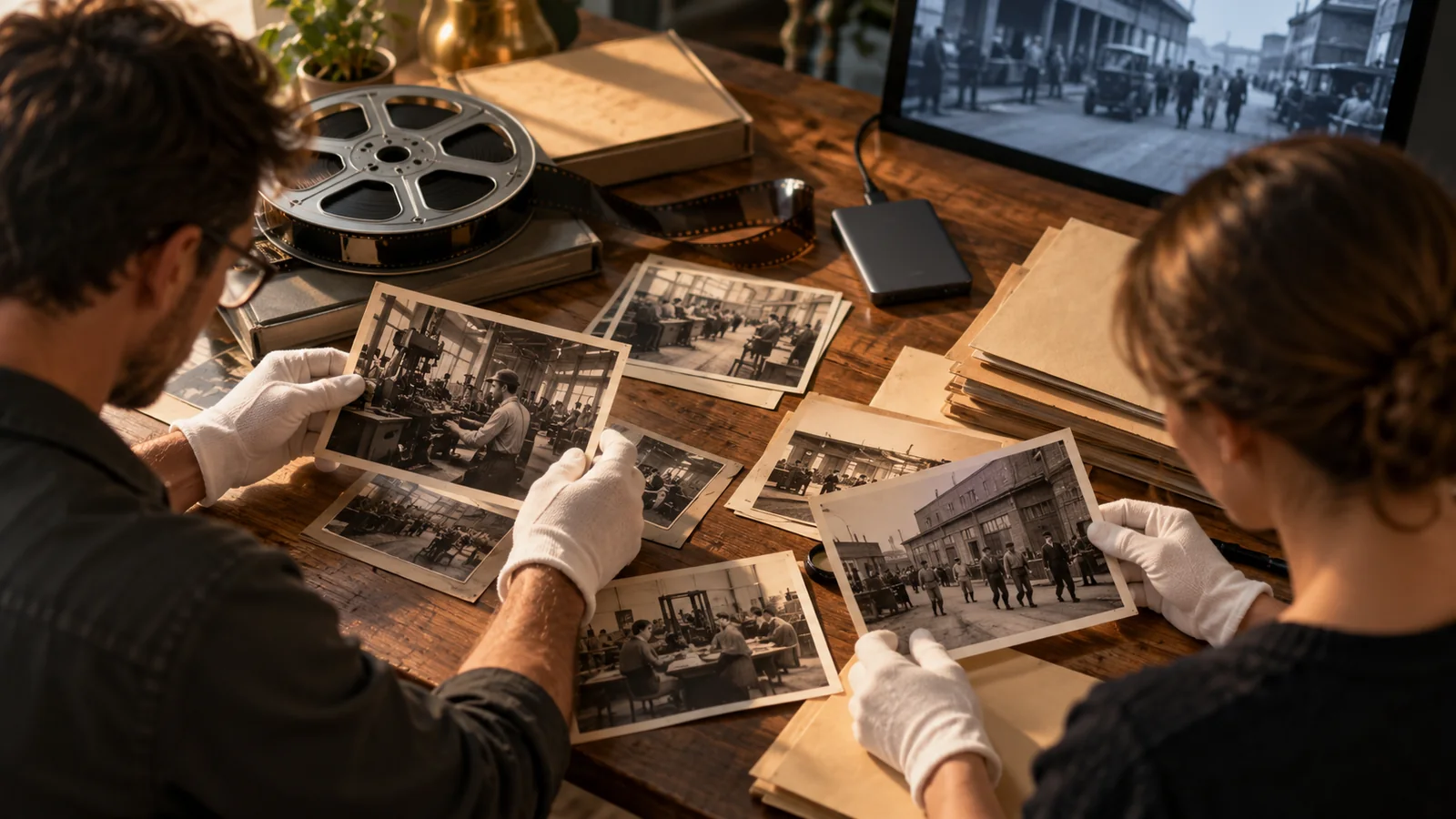
Make an inventory of the items that appear relevant: photographs, recorded interviews, old advertisements, presentation files, documents or physical media. Note where each item is held and who can provide information about it. A colleague remembering that a tape exists is a lead to investigate, not an asset the editor can already use.
Give important items a stable reference. A simple record can include an identifier, description, current location, contact person and the story question it might help answer. Keep uncertain dates or identities marked as uncertain. The record should let another person find the same item without reconstructing the original conversation.
Separate the material you have seen from the material you hope to obtain. This makes it easier to discuss a realistic treatment and schedule. If an essential item is unavailable, the team can explore another way to explain the point rather than discover the missing dependency during the final edit.
Treat legacy-media transfer as a separate responsibility
If relevant material is on old tape, film or another format your team cannot inspect, ask an appropriate transfer specialist to assess it. Discuss the source format, condition, handling and the files the production team needs. Do not assume an editor can play every legacy format or that a box label identifies what is actually recorded.
Ask the receiving editor and transfer specialist to agree the handoff before work begins. Identify how the source items and resulting files will be related in the inventory, who confirms receipt and what remains unreadable or incomplete. Keep the physical originals under the handling arrangements agreed with the responsible people.
This article does not claim Bolt digitizes legacy film or tape. Confirm that specialist work separately with the provider selected for it. Bolt’s video editing team can discuss the creative editing assignment and the material needed for that scope. Distinguish obtaining usable source files from shaping them into the finished story.
Check what the material actually establishes
Ask a knowledgeable reviewer to verify names, dates, places and the event an item depicts. Compare an interview recollection with available records when the story depends on a specific fact. If accounts differ, identify the discrepancy and the person who can resolve it. A confident recollection should not quietly turn an open question into an approved caption.
Keep the original context with a selected excerpt. An old advertisement may show how the company presented itself at the time; it does not automatically prove that every claim in it was true. A photograph of a prototype may not depict the product that customers later received. Tell the creative team what the item supports and what it does not.
Maintain a short list of facts still awaiting confirmation. Connect each question to the proposed scene, quotation or graphic it affects. That helps reviewers understand the consequence of an unresolved detail. If a fact cannot be established, discuss changing the wording or story rather than concealing the uncertainty with attractive pictures.
Keep use review separate from story approval
Identify who will review whether each proposed item may be used in the intended film and its versions. Send that person the planned destinations and relevant source information. Possession of a file is useful for locating it, but it should not be treated as the complete review of the proposed use.
Flag third-party material, old music, commissioned photographs and anything with unclear provenance for the appropriate reviewer. Keep the decision and supporting records connected to the asset. This is a production-planning step, not an interpretation of copyright, an agreement or a license. Unresolved questions may need qualified professional review.
Old footage may carry a soundtrack that does not belong in the new edit. Our music briefing guide explains how to separate creative music choices from confirmation of the actual use. Give the editor a clear status instead of letting a temporary reference become an assumed final selection.
Plan new material around the gaps
Ask what the archive cannot explain on its own. A new interview might provide context for a decision. A present-day demonstration might help the audience understand an unfamiliar process. Record why the new material is needed so the shoot supports the history rather than become a separate, loosely related company film.
Distinguish historical evidence from illustration. If the creative approach uses a recreated scene, a stock image or another visual device, agree how the audience will understand its role. Do not let an illustrative picture silently stand in for a documented company event. Review that distinction in the treatment and again in the cut.
Keep the assignment proportionate. The team may discover enough material for a focused story rather than a comprehensive history. A clear boundary can make the film more useful, particularly when the remaining gaps would require research or access that the current project cannot support.
Give the editor a traceable handoff
Provide accessible media, the inventory, contextual notes and the review decisions alongside the current brief. Identify preferred passages or photographs with stable references, while preserving the agreed route to the rest of the source material. The editing handoff checklist covers transfer, completeness and the wider delivery plan.
Check historical captions and the relationship between narration and pictures in the review cut. A correct date placed over the wrong event can still communicate the wrong story. Name the factual reviewer and the person consolidating creative feedback, and keep unresolved assets visible until their status is settled.
Email brian@boltworldwide.com with the history you want to explain, the material located and the intended use. A useful first conversation can identify the creative editing scope, evidence gaps and specialist work that need attention before the film is commissioned.