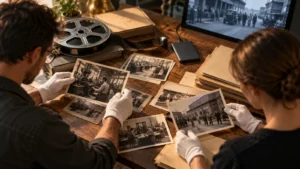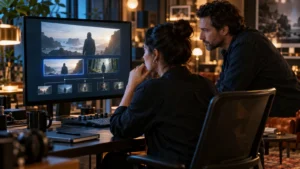

Choose documentary-style corporate video when the story depends on people explaining their own experience and the crew observing relevant work. Choose scripted corporate video when the message, sequence or delivery must be planned precisely. A hybrid can combine both. Decide what the viewer must understand, what can be verified and which words must be exact before choosing the approach.
Neither format establishes credibility by itself. A natural interview can contain an unsupported statement, while a scripted scene can explain something accurately. The useful distinction is how the story will be developed, recorded and approved. Make that choice before the shoot plan assumes the answers.
Start with the kind of evidence your audience needs
Ask whether the viewer needs to hear a person’s account, see a process unfold or follow a deliberately constructed explanation. Those assignments need different preparation. A customer explaining a difficult implementation brings personal experience. A spokesperson introducing an official policy may need precise approved language. A staged demonstration can make a sequence visible without pretending it happened spontaneously.
Write the intended audience question at the top of the brief. Then separate facts the film needs to establish from feelings the creative treatment should convey. Our brand film treatment review explains how to connect a message to what a scene actually shows. Here, the next decision is whether those scenes will be observed, constructed or a clearly understood combination.
What documentary-style production asks from the client
Documentary-style production still needs a plan. Identify people with firsthand experience, the situations they can discuss and the activity the crew can actually observe. Arrange access and permissions through the appropriate company contacts. An interesting interview does not establish that the location, customer or working process can also be filmed.
Give the producer background, useful questions and the facts that need checking. Leave room for an answer that changes the proposed story. If every participant must repeat an identical conclusion, discuss whether the assignment is really a prepared statement. The employee interview preparation guide covers how to prepare people without asking them to memorize company copy.
Agree what the team will do if the experience is less tidy than the original idea. A participant may describe a limitation, correct a date or be unable to support a result. The production plan needs a route for checking that information and selecting an accurate story. It should not depend on editing uncertainty into confidence.
What scripted production asks from the client
Scripted production makes the proposed words and sequence available for review before recording. Your team should identify the factual reviewer, the final message owner and the people responsible for confirming any product behavior or official statement. Approve those elements before the schedule treats the script as ready to film.
A script also creates practical commitments. Decide who delivers the words, what actions accompany them and which locations, props or demonstrations are needed. Check whether a line is clear when spoken and whether the planned pictures support its meaning. Bolt’s scriptwriting page is a starting point for discussing that creative work. Confirm the actual responsibilities in the project scope.
Do not assume scripted delivery will be simpler or less expensive. A carefully built scene may require more preparation than an interview, while a documentary assignment can require substantial access and coverage. Ask for a production plan based on the real assignment, rather than a price attached to the format’s name.
When a hybrid approach makes sense
A film might open with a prepared explanation, move into a customer’s own account and use supporting footage to show the work. That is a planning option, not a formula that every brand should follow. Give each element a clear purpose and explain to participants which parts are scripted and which are interviews.
Keep the status of recreated scenes clear in the treatment and review. Do not present a performer as a real customer or an illustrative event as an observed result. If the meaning depends on how a scene is identified, have the responsible reviewers settle that presentation before recording. Creative expression and factual evidence need distinct review questions even when they appear in the same film.
Match approval to the material you will have
For scripted work, review the proposed language and actions before the shoot, then check the recorded performance and finished cut. For interview-led work, approve the topics and factual boundaries in advance, then review the actual statements in context. An approved interview plan cannot approve words nobody has heard yet.
Our case study evidence planning guide helps connect proposed claims to support. Use that evidence during edit review. Keep qualifications that affect the meaning, and do not make a participant sound as though they answered a different question.
What should the production brief say?
State the audience question, the proposed format and why it fits. Identify exact-wording requirements, possible participants, confirmed access, supporting material and unresolved facts. Name the people who review the script or interview plan, the selected statements and the final versions. Ask the producer to explain how those decisions affect the shoot and edit.
Email brian@boltworldwide.com with the message, audience and available people or material. A useful first conversation is about what your film needs to establish, then which production approach can establish it honestly.