Plan social video creative variations by naming the question each version explores, identifying what changes and keeping the underlying facts consistent. Agree the required coverage, approval owner and version list before filming. Alternate openings should offer a meaningful creative choice, not a collection of exports whose differences nobody can explain.
A campaign can need several short videos without needing several unrelated concepts. The planning challenge is deciding which differences deserve production time and which can be developed in editing. Start with the uncertainty you want the additional version to address.
Give each variation a reason to exist
Describe the proposed difference in plain language. One opening might begin with the buyer’s problem; another might show the relevant product action immediately. Ask what each approach helps the viewer understand and why the team wants to compare them.
Avoid calling every change a test. If audience, placement, offer and creative all change together, the resulting performance will not isolate the effect of the opening. Agree with the distribution team what can reasonably be learned and what remains uncertain.
Record the objective and intended use in the production brief. A request for more social assets is not yet a production plan.
Separate a new opening from a new screen format
A portrait export of the same sequence is a format version. A different first scene, demonstration or line of dialogue is a creative variation. Both may be useful, but they require different decisions.
Our guide to planning vertical and horizontal coverage addresses composition and capture. Here, the question is which story choices should differ even when the screen shape stays the same. Keep those decisions separate in the deliverables list so neither is assumed to be included automatically.
Plan the footage that makes the alternative possible
Take a hypothetical product demonstration. A problem-led opening may need a clear view of the difficult task. A demonstration-led opening may need the product action to be understandable without a long introduction. Record the context needed for either sequence to remain accurate.
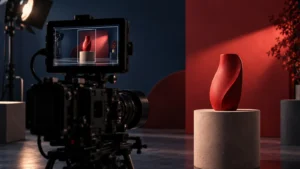
Ask the director and editor which alternate moments require another setup, another performance or an additional insert. Include those requirements in the shoot plan. More recorded footage is not the same as useful coverage for a particular alternative.
Keep the claim consistent across the versions
Check that each opening leads to a supported message. A shorter introduction must not remove a condition or turn a limited demonstration into a broader promise. Review the relationship between narration, captions and pictures, not only the words in isolation.
If one variation introduces a new claim, send it through the relevant factual and brand review. Do not treat it as approved because the main film was approved. Name the person who can resolve uncertainties before the edit depends on the answer.
Make the version list easy to review
Give each planned output an identifier and describe its opening, message, format, approximate duration, closing action and approval status. Mark which decisions are shared and which belong to a particular version.
For an illustrative pair, a problem-led version and a demonstration-led version might share the same supported explanation and closing action. The version list should make that relationship visible without implying that either approach is guaranteed to perform better.
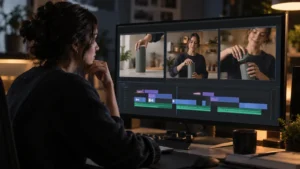
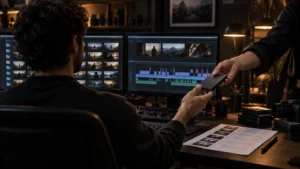
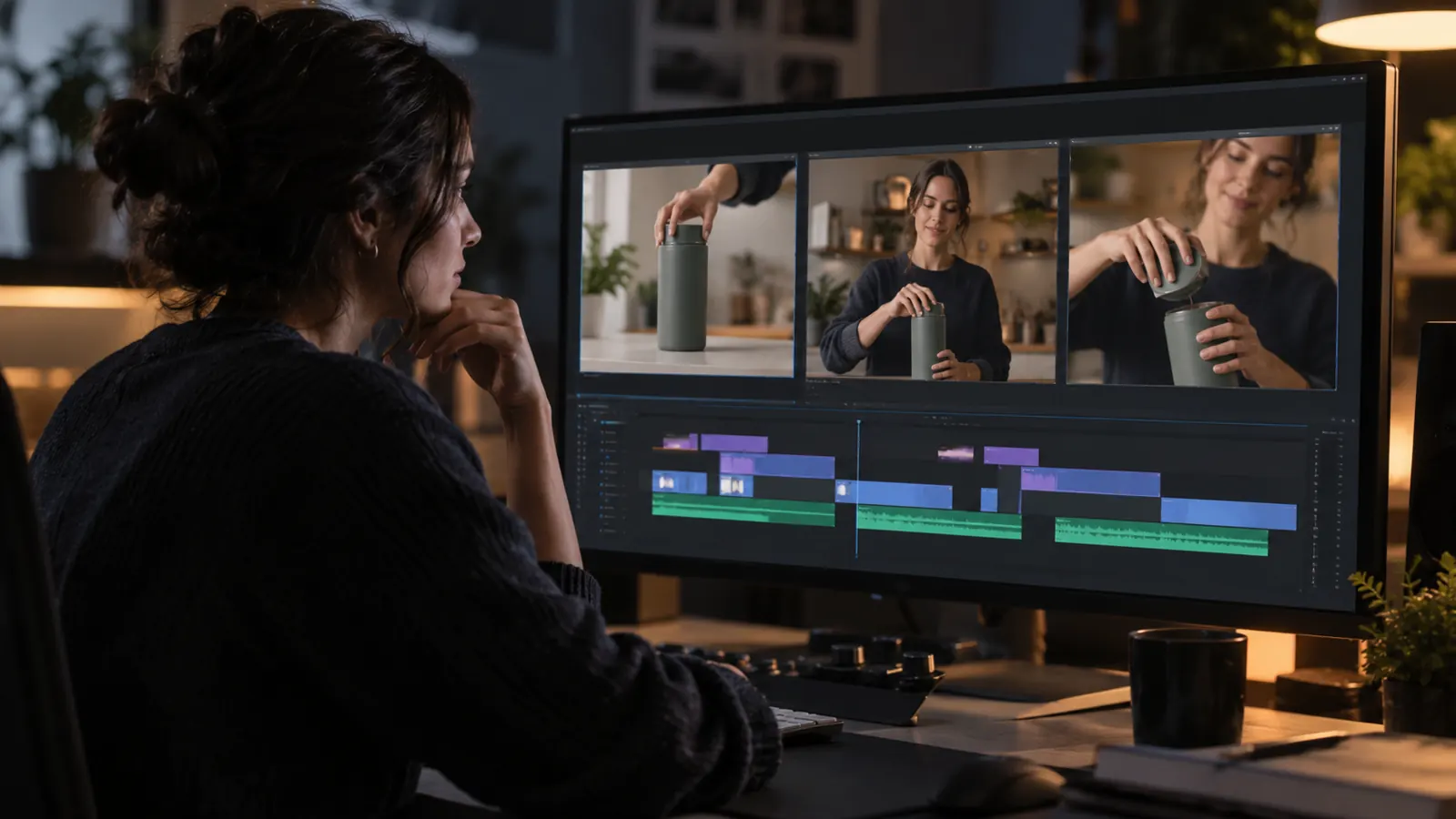
Discuss the work with the video editing team. Ask what must be supplied and what can be developed from the agreed footage, then include the versions in scope.
Decide how feedback will become a decision
Have reviewers identify the version and moment they are discussing. Consolidate comments and separate factual corrections from preferences about the opening. Keep approval attached to the actual final export, including graphics and captions.
When results become available, connect them to the original objective. Our campaign measurement guide distinguishes attention measures from business outcomes. A difference in views alone does not establish which creative decision caused a business result.
How many variations should we request?
Request the alternatives you can explain, produce, review and use. Begin with a specific question and agree the scope with the production and distribution teams. There is no useful universal number for every campaign.
Can the editor create every alternative after filming?
Only if the available material supports it. An alternate sequence may be possible in the edit, while a different performance or demonstration may need planned coverage. Identify that dependency while the shoot can still accommodate it.
Email brian@boltworldwide.com with the campaign objective and the alternatives you want to explore. A useful variation starts with a decision worth making, not a larger delivery folder.