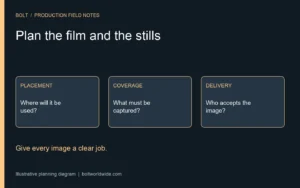
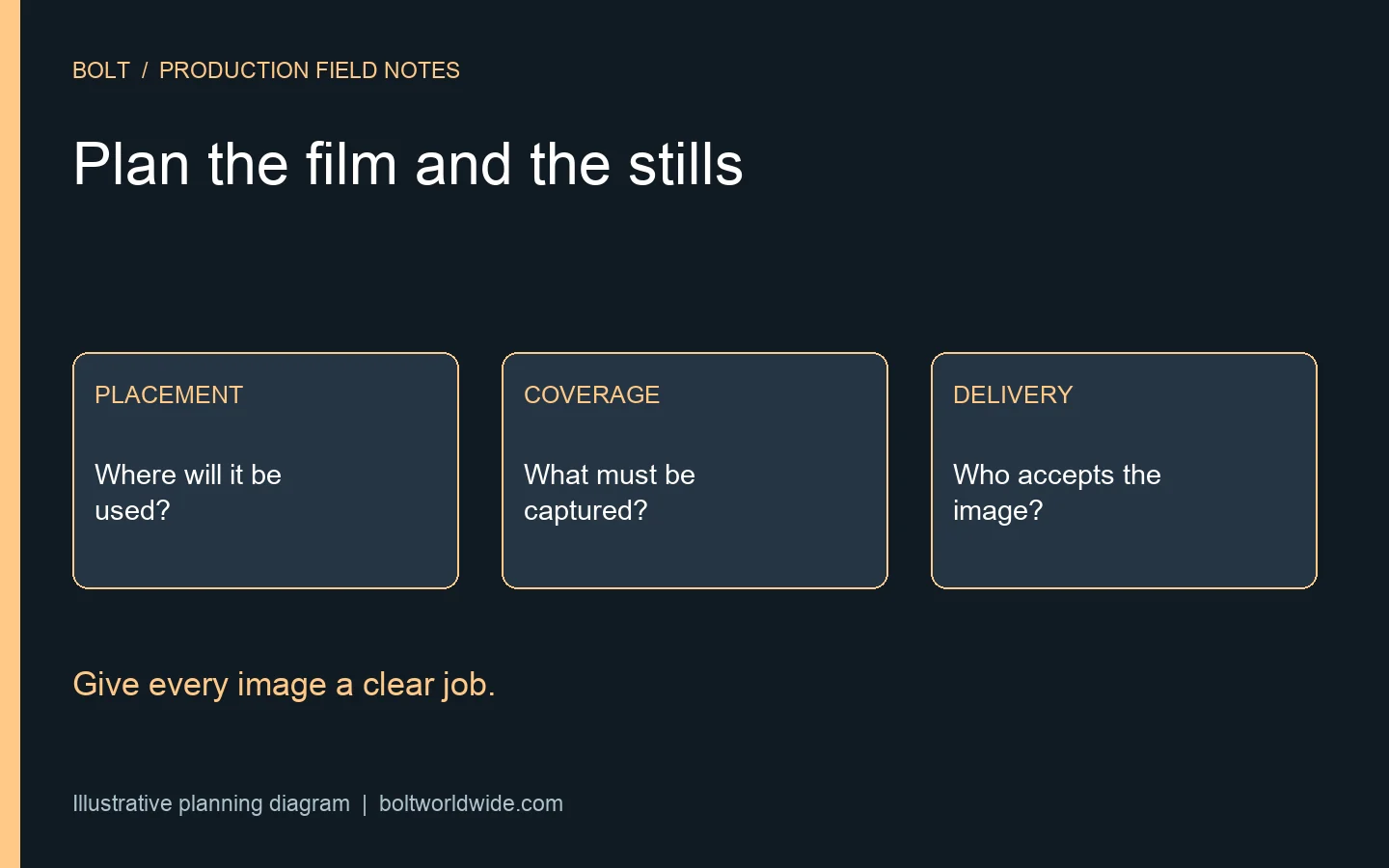
Plan still photography alongside a video shoot by defining what each image must do, where it will appear and whether the video coverage can genuinely supply it. Give dedicated photographs their own place in the brief, crew discussion and schedule. Shared access to people and locations can be useful, but stills should not become an unplanned task squeezed between video takes.
The question often arrives after the film is finished: can the team also provide a website banner, a portrait and a press image? A useful video frame may answer one request while leaving the others unresolved. Make those needs visible before filming so the team can decide what to capture, what can be extracted later and what needs a separate arrangement.
Start with the placement and the picture’s job
Ask the people using the images to describe the destination, layout and subject. A product image explaining a detail differs from an environmental portrait or a wide composition with space for copy. Give the team actual placement requirements where available. A request for some photos leaves the important decisions with whoever notices the gap last.
For an invented example, a business may need an interview film and a website banner featuring its speaker. The film can keep the face central, while the banner needs the person on one side with useful space beside them. The same moment may not serve both compositions. Discuss that difference before choosing the setup rather than assuming a crop will supply the missing space.
Add these requirements to the video production brief. Name who will approve the images and which placements are confirmed. Separate a required launch asset from a possible later use. That lets the production team prioritize genuine dependencies without treating every speculative image request as an equal commitment.
Decide where a video frame is a suitable option
Adobe’s current Premiere guidance explains that an individual video frame can be exported as an image. That establishes a practical option, not a promise that any frame will meet an intended placement. Ask the team to evaluate the actual recorded material against the image requirement.
Look at expression, action, focus, movement and composition in a representative exported frame. Something that reads naturally while moving may be an awkward isolated moment. Check the proposed image at its intended size and crop with the person responsible for using it. A camera specification does not replace that inspection.
Keep the decision specific. You may accept an exported frame for a reference image while commissioning a dedicated portrait for another use. Or the planned video coverage may already provide a suitable still. Neither choice needs to become a blanket rule about every production. Identify which deliverable each approach can support and who has accepted the result.
Give dedicated stills a place in the shoot plan
Ask whether the still photographer and video team can work within the same arrangement or need separate time. Discuss people, lighting, sound, equipment position and access to the subject. A photograph should not depend on someone stepping into the camera path or interrupting a recorded answer because nobody made time for it.
For the hypothetical speaker, the plan might reserve a portrait setup after the interview while the person and room are still available. Another assignment may need photographs during a different activity. These are planning examples, not suggested durations. Have the responsible production team estimate the work and explain the tradeoffs within the proposed day.
Our guide to planning vertical and horizontal video makes a related point about coverage: a new placement can require a different composition. Still photography adds its own requirements rather than simply another file extension. Discuss those requirements with the team before making promises about how many uses one setup can serve.
Agree who owns each part of the image work
Clarify whether stills mean dedicated photography, selected video-frame exports, behind-the-scenes coverage or a combination. Those descriptions should appear in the scope so the brand, agency and production team are comparing the same assignment. Do not assume that a video booking includes a photographer, unlimited selections or every proposed edit.
Name who captures, selects, reviews and finishes the images. Ask how selections will be presented and what changes are included in the proposed work. Identify who resolves a disagreement about the image before it reaches the publishing team. A shared production day does not remove the need for an understandable delivery process.
Discuss planned use with the people responsible for the relevant participant, property and creative arrangements. Identify which uses still need confirmation. This article does not determine rights or provide agreement terms. The practical requirement is to avoid commissioning one use while leaving another team to assume that every later placement has been cleared.
Review a representative image before relying on the setup
When practical, inspect a sample against the actual layout while the subject and setting remain available. Check whether the important action is visible, the expression fits and there is room for required text. Include the intended crop in the discussion rather than reviewing a full-width picture and assuming a smaller placement will work unchanged.
Keep the still review connected to the video schedule. Decide who can approve a change and how it affects remaining work. If the photograph requires a separate arrangement, acknowledge that cost and scheduling decision rather than quietly borrowing time from a higher-priority scene. The aim is a workable combined plan, not a competition between the two outputs.
Use clear file names or another agreed reference when selecting images. Record which version has been approved and which requests remain open. A photograph visible in a contact sheet is not necessarily the finished delivery. Confirm the selected files and intended outputs with the receiving team before calling the image portion complete.
What should go into the request for a combined shoot?
Send the video objective, required still-image placements, subjects, available access and the date the assets are needed. Explain which images are essential and which are optional. Ask the production team to identify shared opportunities and separate work in its proposal. Do not judge a combined plan only by whether it uses the same location day.
Email brian@boltworldwide.com with the film and image requirements. The useful question is whether the agreed coverage will give each publishing team what it needs, with the responsibilities and review process clear before the shoot.