
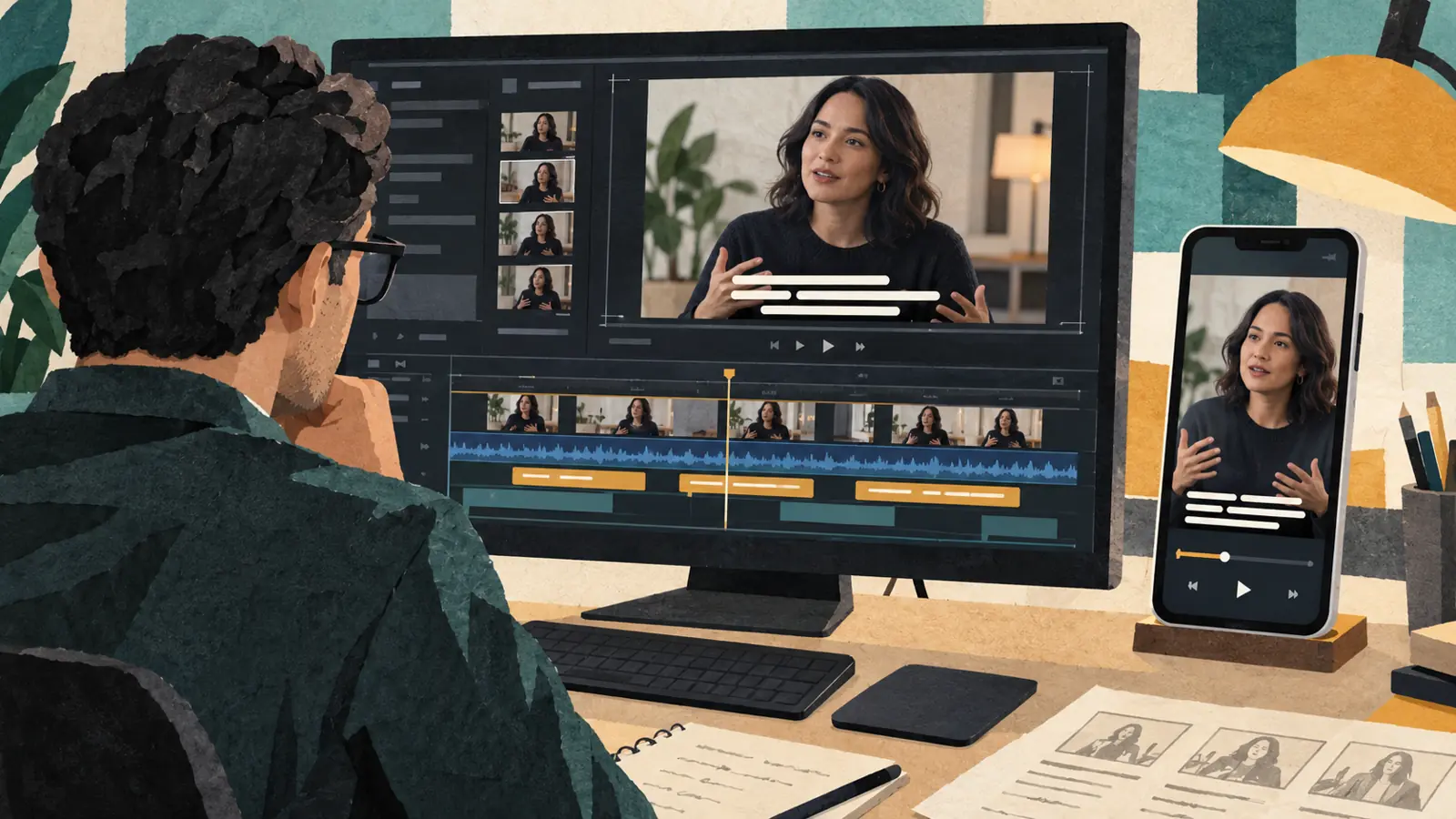
Plan video caption delivery by identifying the viewing destinations, required caption versions, review owner and final playback checks before the edit is approved. Match captions to the exact export they accompany. A caption file in a delivery folder is only one part of the job; someone must confirm that the intended player displays the right information at the right time.
Put these decisions in the video production brief. They affect who reviews the work, which assets the editor needs and what the receiving team must test.
Agree the audience needs and delivery responsibility
List where each video will appear and who controls that destination. Ask the publishing team which caption formats and upload process its player supports. Identify the person who prepares the captions, the person who verifies the language and the person who checks playback.
The World Wide Web Consortium’s media accessibility planning guidance recommends addressing accessibility throughout production, including the content and media player. Use it to inform the conversation with the team responsible for your requirements. This article is a production checklist, not a certification that a particular video or website meets every accessibility requirement.
Distinguish the caption deliverables
The World Wide Web Consortium describes captions as synchronized text representing speech and relevant non-speech audio. Closed captions can be switched on or off; open captions remain visible. Its captions guidance also explains why automatic output needs accuracy review.
Agree which deliverables each destination needs rather than using the word captions as a complete specification. Confirm whether the assignment includes a separate timed file, a video with visible captions or both. Ask how the receiving team will identify the language and corresponding video version.
A translated subtitle version is a separate language decision. Our video localization guide introduces that broader production conversation. Specify the audience and review responsibility for each language rather than assuming one approved English export settles every version.
Review against the final sound and picture
Give the reviewer the video, caption file and exact version identifier together. Ask them to check the words against the actual audio, including names and specialist terms. Identify who can resolve a disputed word rather than leaving the editor to guess.
Watch the captioned video as a whole. Check whether the text arrives with the relevant speech, remains understandable and interferes with essential on-screen information. Review changes in speaker and meaningful sounds where they affect understanding.
Discuss the work with the video editing team. Record corrections against the specific version so the team can confirm what changed.
Keep captions connected to every cutdown
If an edit loses a sentence or gains a new opening, check its captions again. Do not pair a revised video with the timed file from an earlier export simply because the filenames look similar.
Create a delivery list connecting each video filename, language, caption asset, approval status and destination. Keep superseded files distinguishable from approved files. For an employee learning library, connect this process with the audience and task planning in our onboarding video guide.
Test the uploaded result in its intended player
Have the receiving team upload the approved assets to the intended destination and inspect the result. Confirm that the expected caption option is available and that the correct language and version are attached. Review at the viewing sizes relevant to the audience, including a phone when applicable.
Ask the responsible accessibility reviewer to identify any additional needs, such as a transcript, description of important visual information or player controls. Captions should not be treated as a substitute for considering those requirements.
Who signs off on caption delivery?
Name both the content reviewer and the person accountable for the published player experience. They may be different people. Keep the final approval with the exported assets and the destination check.
Can we correct captions after delivery?
Discuss the correction process with the publishing team. Identify which asset needs replacement and repeat the relevant playback check. A corrected local file does not establish that the published version has changed.
Email brian@boltworldwide.com with your destinations, languages and delivery deadline. Caption planning is most useful while the team can still plan who will prepare, review and publish each version.