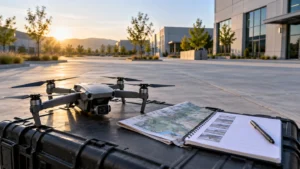
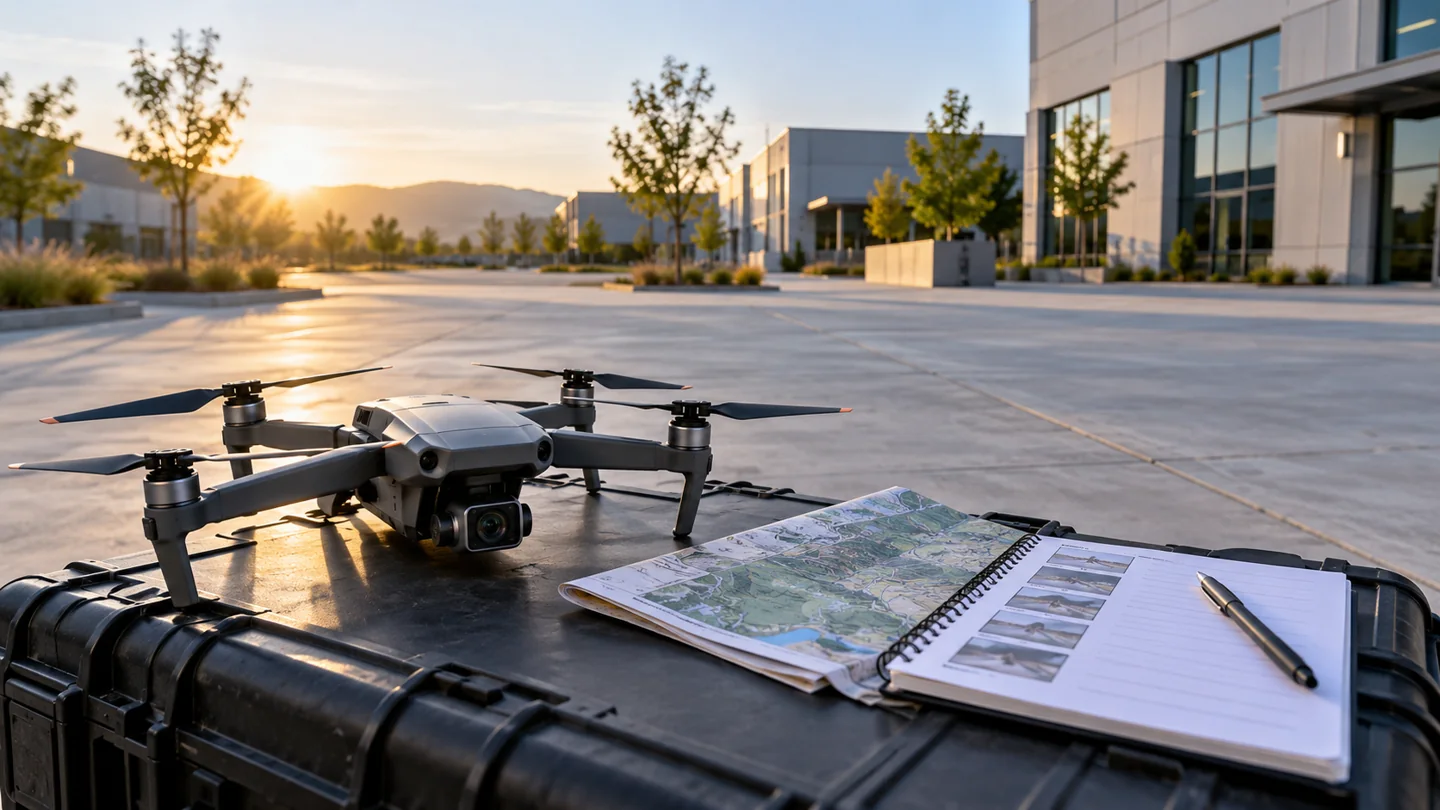
Add drone footage when an elevated view explains something the audience needs to understand: a location, the relationship between spaces or the scale of an operation. Before booking, define the shot’s purpose, ask the responsible operator to assess the location and agree a usable alternative if the flight cannot happen. An attractive overhead view should earn its place in the story.
This is a buyer’s planning guide, rather than an equipment review or a flight authorization. Our broader pre-production overview introduces the location and technical scout. Here, the decision is whether an aerial shot contributes enough to justify including it in the production plan.
Describe what the audience learns from the height
Write a sentence explaining what the proposed view reveals. A hypothetical manufacturing film might need to show how a loading area connects to the building. A ground-level sequence might explain an individual task better. Choose the viewpoint that makes the relevant relationship understandable.
Ask the director to describe how the shot connects to the surrounding scenes. Does it establish a place before an interview, reveal a route or supply evidence of scale? If the only explanation is that drone footage looks impressive, revisit the assignment before treating it as essential coverage.
Put the intended use in the video production brief, including the viewing destination and any shorter versions. A wide establishing view may not communicate the same detail when cropped for a phone.
Review the actual location before promising the shot
Give the production team the location, proposed date, subject and intended movement. Identify the person who can coordinate access with the property or venue. Ask the responsible flight operator what information is needed to assess the proposed operation.
Separate property access from the flight assessment. An invitation to film at a site does not establish that the proposed flight is feasible. Keep the decision open until the responsible people have checked the location and operation.
For United States business filming, the FAA’s commercial drone guidance describes small-drone business operations and associated responsibilities. Have the operator confirm the applicable pilot, aircraft and operational requirements, including any needed airspace authorization or waiver. Do not infer permission from a drone’s availability or a previous flight at the same address.
Ask what the quote includes
Ask who owns the flight assessment, preparation, filming and delivery. Confirm which proposed shots the team is estimating and what would change the scope. Discuss access arrangements, coordination with the rest of the crew and the decision point for abandoning an unsuitable shot.
These are questions for the proposed operator, not claims that every production company provides the same crew or equipment. Confirm the actual arrangement for your project in writing. Do not assume that adding a drone to an equipment list also assigns responsibility for the flight.
Make the fallback useful to the same story
Ask the team how weather or other operational constraints would affect the schedule. Agree who makes the flight decision and how that decision reaches the producer. A backup date, a revised sequence or a ground-based establishing shot may be worth discussing, depending on the objective and location.
Test the alternative against the original communication need. If the audience must understand how two spaces connect, plan another way to show that relationship. A different attractive shot may still leave the explanation missing.
Discuss those choices during pre-production planning, while the schedule and coverage remain flexible. Avoid making the entire edit depend on an unconfirmed aerial sequence.
Tell the editor what the aerial material is meant to do
Keep the approved shot purpose and relevant production notes with the footage. Identify the useful takes and any restrictions or unresolved review questions. The editing handoff checklist explains the broader material an editor needs alongside the media.
Review the aerial sequence in the finished story. Check whether it establishes the intended information and whether the next shot makes sense. Remove a beautiful view if it distracts from the explanation the audience came for.
Is drone footage necessary for every location film?
No. Start with what the viewer needs to understand, then choose the coverage. A useful ground-level sequence can be the right answer when height adds little information or the proposed aerial shot is unsuitable.
What should we bring to the first conversation?
Bring the objective, location, intended date, proposed shot purpose and required versions. Mark the flight and access questions as unresolved until the responsible team checks them.
Email brian@boltworldwide.com with your video brief and the role you want an aerial view to play. Discuss the coverage and responsibilities before committing the story to a particular shot.