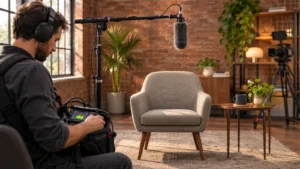
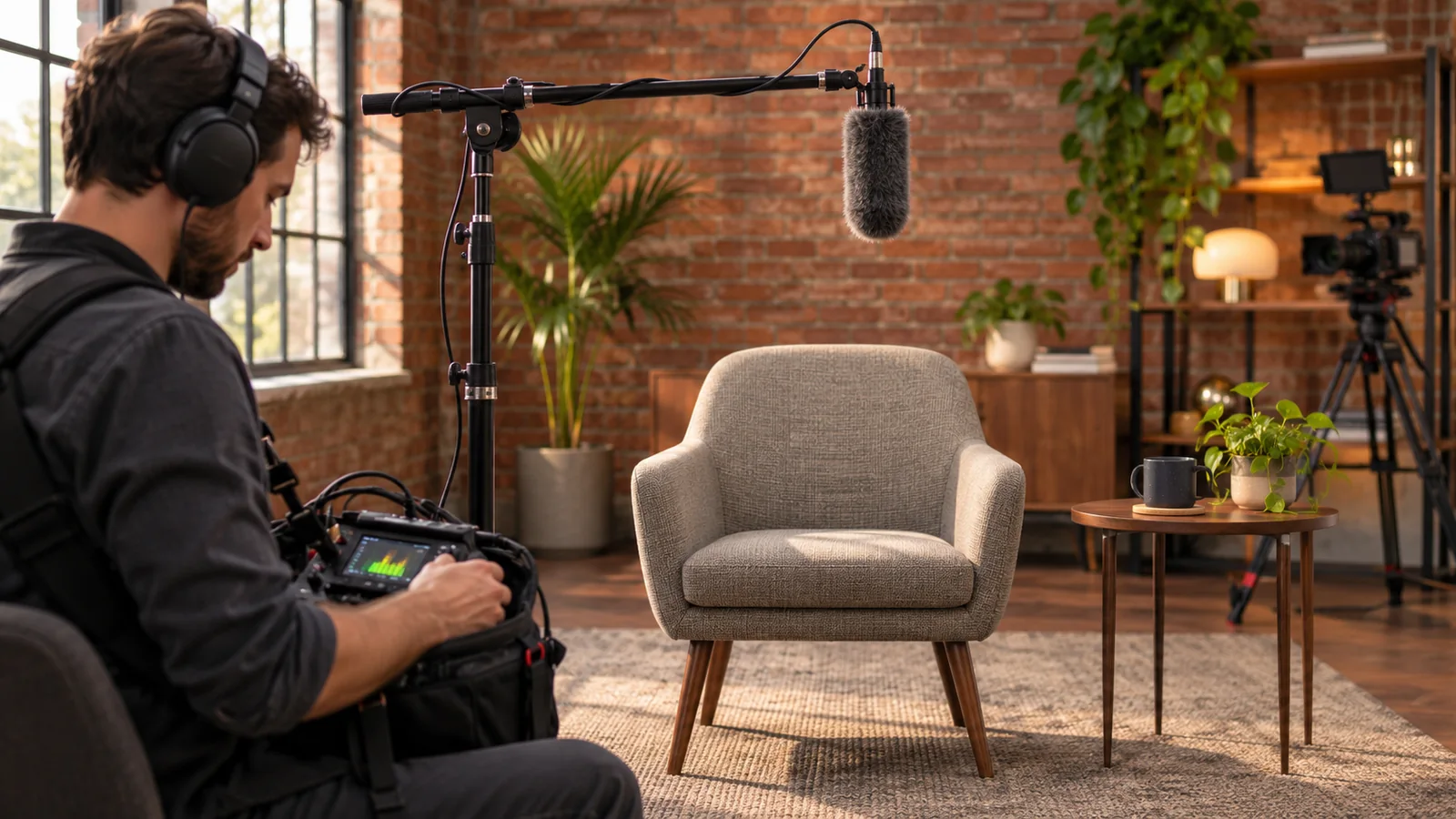
Record a speech-free sample of the background the interview microphones actually picked up. Capture it before moving the microphones, changing rooms or switching off equipment that was audible during the take. If the background changed during the interview, record and label the conditions that match each set of takes.
Listen for the sound that belongs to the take
Room tone is the ordinary background sound at a recording setup. An editor can use a matching sample under a pause or between edits so the background does not abruptly disappear. Ask the sound recordist what they hear in the interview audio before deciding which sample the editor will need.
Suppose you are filming a fictional interview in an office with a steady ventilation sound. Record the room with the ventilation as it was during the answers, using the same microphone setup. If it switches off partway through and later answers sound different, capture that condition too. Note which takes go with each recording.
An isolated interruption calls for a different decision. If a cart rattles by during a word, a background sample cannot restore the word. Have the recordist flag the take and decide with the interviewer whether to get another answer while the speaker is there. Bolt’s guide to cleaning up or rerecording dialogue covers the edit decision when an alternate is available.
Make the recording before the crew moves
Ask the crew and speaker to pause quietly while the sound team records. Keep the microphones where they were during the interview. Give the sound recordist time to monitor a usable stretch without speech, chair movement or equipment handling. Agree on the needed recording with the person responsible for sound.
If you move the interview to another room, change microphones or reposition the speaker, listen again. A new setup may need its own sample. For a remote interview, test the guest’s real recording setup first so the recording and its background come from the same setup.
Give the editor enough information to use it
Label the sample with the interview, room or setup and the takes it matches. Flag any changes, such as ventilation switching on. Send the original sound files and notes together. Bolt’s editing handoff checklist covers the rest of the material the editor needs.
In review, listen across the transition at normal playback level. If the background jumps or a word becomes unclear, ask the editor to revisit that moment. Keep the speaker’s intended meaning intact when shortening a pause or joining two parts of an answer.
Before wrapping, confirm which setup has a usable recording and where it is saved. If one is missing, ask whether the original conditions can still be captured before the crew breaks down the setup.
If you’re planning interviews for a brand video, see Bolt’s post production services or email brian@boltworldwide.com with the interview setup and intended edits.