Before bringing a creator into a produced brand video, agree what they are contributing, which content will be made and who will publish it. Separate appearing on camera from developing the idea or sharing the finished work. Confirm the product experience, review process and proposed uses before filming. A recognizable person is one production input, not a complete campaign plan.
This guide concerns a creator participating in a planned shoot with a production team. It is different from simply asking someone to publish a post using their usual process. Either arrangement may suit a project, but the responsibilities need to match the actual assignment. Start with the audience question and the contribution the creator can truthfully make.
Why does this video need this person?
Describe the role before beginning a search. A creator might explain a task they understand, demonstrate a product they have used or contribute a style of communication relevant to the audience. These are possibilities to investigate, not proof that a particular following will produce a business result. A large audience does not answer what the person will say or why it belongs in this film.
Connect the role to the production brief. Identify the intended viewer and the question the film should answer. If the only explanation is that the person is popular, discuss what the audience will learn from their participation. The assignment should still make sense when the team examines the script, location and product details.
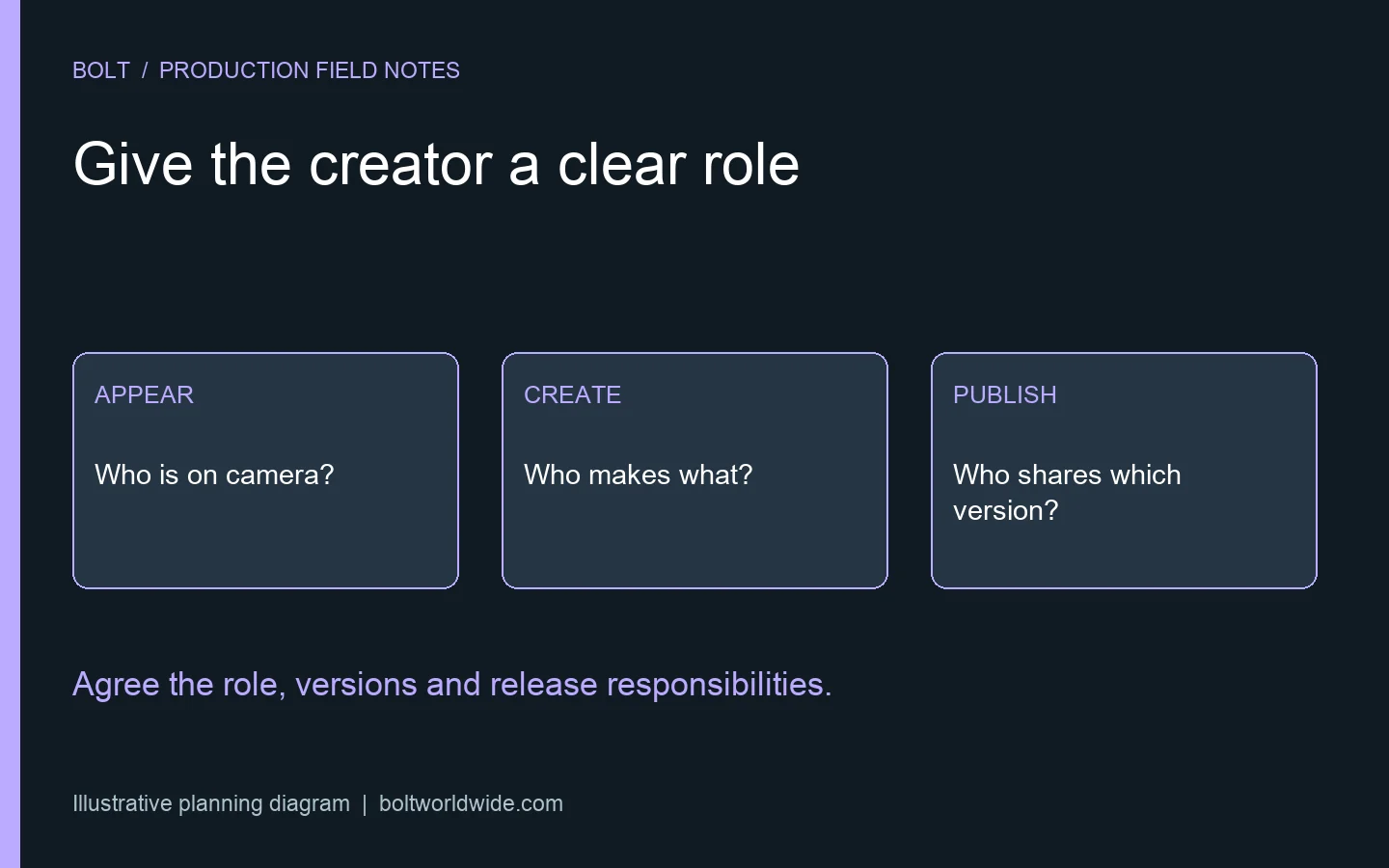
Are they appearing, creating or publishing?
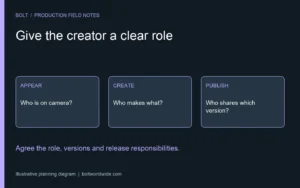
Separate the responsibilities explicitly. Appearing means participating in the footage. Creating may include developing an idea, contributing a script or making additional material. Publishing means distributing agreed content through a destination the person controls. One responsibility does not establish the others. Ask each party to describe what they understand themselves to be providing.
For a hypothetical product demonstration, a creator might appear in the main film while the brand publishes it. Another arrangement might include a separately prepared creator post. Record those as different deliverables, with their own review and release expectations. Do not add a publishing obligation after the shoot merely because someone has an audience you would like to reach.
What can the creator honestly say about the product?
Find out which experience the person actually has and what they still need to understand before recording. Distinguish a personal account from an official product explanation. Give factual claims an appropriate company reviewer. The production process should not turn an untested reaction into a statement about repeated use or ask someone to describe an outcome they have not experienced.
Our testimonial cut review guide explains why meaning and source context matter when a personal account becomes an edit. Apply that care to the proposed contribution here. If a line needs confirmation, leave it open for review rather than use the speaker’s confidence as evidence.
How will the creator and director develop the performance?
Share the audience, concept, intended tone and practical requirements before the shoot. Explain where exact approved wording matters and where the creator can contribute their own expression. Ask how questions and revisions will be handled. A person familiar with making their own content may need a clear picture of working with a separate director, crew and review process.
Discuss references for the contribution, not a demand to reproduce someone else’s recognizable work. Give the creator a chance to identify wording that does not fit their experience. If the concept relies on a reaction or demonstration that cannot happen as planned, tell the producer early enough to reassess the sequence. Preparation should reveal those dependencies rather than conceal them.
Which uses and versions belong in the conversation?
List the destinations and versions being proposed, including any intended paid promotion and content the creator would publish. Ask the accountable parties to confirm the permissions, scope and terms for those actual uses through the appropriate agreement process. Identify unresolved questions before the schedule assumes they are settled. An appearance, a file delivery and permission to reuse material are separate matters to clarify.
The social creative variations guide can help define what changes between versions. Mark different openings, messages and endings in the deliverables list. If a shortened version introduces a different implication about the creator’s experience, give it a fresh substantive review rather than treating it as a purely technical export.
Who will plan disclosure and claims review?
Bring the brand’s appropriate reviewer into the brief before recording. The Federal Trade Commission’s influencer disclosure guidance explains that material relationships, including payment or free products, should be made apparent in an endorsement. For video endorsements, its guidance says disclosure belongs in the video, rather than only in the accompanying description. Check the actual planned use with the responsible reviewer.
Discuss how that requirement affects the recorded words, graphics and intended versions. Keep any approved disclosure with the content it accompanies during editing and publishing. A production checklist cannot settle every project’s obligations, and a platform tool should not be assumed to resolve the whole question. Use the current primary guidance and the people accountable for the actual campaign.
Who approves the content before it leaves the edit?
Name the people who check product accuracy, the creator’s account, brand presentation and release requirements. Agree how they will return consolidated comments against a specific version. Our approval planning guide addresses that coordination. A clear process helps the editor distinguish a factual correction from a preference or a new request.
Have the video editing team identify the materials and references it needs. Keep the agreed scope and pending questions accessible. If someone proposes a new line, destination or version after review, ask which decisions it affects before assuming that the earlier approval covers the change.
What should the final release check include?
Confirm the actual files, publishing destinations, responsible contacts and outstanding decisions. Check that each party has the version they are expected to use. Keep any required caption, disclosure and factual checks connected to that export. A notification that files were sent does not establish that the correct material was published.
If a creator is publishing an agreed post, establish how the brand will check the actual result and who handles corrections. Assess any later performance against the campaign objective and the information available. Do not describe a creator’s audience size or a change in views as proof that their participation caused sales.
Can a creator appear without posting the film?
That can be an arrangement to discuss. State it explicitly and confirm the proposed uses through the proper process. Do not imply the creator has agreed to share the work when the assignment covers only participation in production.
What should we send before asking for a shoot plan?
Send the audience, concept, proposed creator role, product context, intended versions and publishing responsibilities. Identify the relevant review contacts and open permission questions. Email brian@boltworldwide.com to discuss a production plan built around the actual contribution and deliverables.