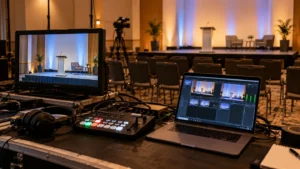

A recruitment video should help a potential applicant understand the work, the people and the environment they would be joining. Choose specific examples, show relevant tasks in context and check that the edit does not imply a promise the employer cannot support. An attractive workplace montage is not a substitute for information about the job.
Start with the candidate’s decision: is this role and way of working worth exploring? This guide concerns that pre-application question. Our employee onboarding video guide addresses the different task of helping someone after they join.
Pick the candidate question before choosing the scenes
Work with the hiring team to name the questions the film should answer. What does the role contribute? Who does the person work with? What kind of problem will they spend time on? Which part of the working environment would be difficult to understand from a written description alone?
Keep the assignment focused. A film introducing an engineering team may need a different example from one introducing a customer-facing role. If the audience includes several unrelated roles, decide what belongs in a company overview and what needs a separate explanation.
Record the intended audience and use in the video production brief. Identify the current role information the production team should use, along with the person who can confirm it.
Replace culture adjectives with an observable example
Ask what a statement such as “collaborative” means in an ordinary working moment. An employee might explain how a question moves between two teams, while the footage shows a relevant discussion or handoff. The example should reflect the actual work rather than a meeting staged solely to illustrate a slogan.
For a hypothetical product team, a useful sequence could follow an employee reviewing a prototype, explaining a choice and asking a colleague for input. It gives the candidate something to understand. It does not establish that every employee has the same experience or that the company guarantees a particular career outcome.
Label illustrative material appropriately when it could otherwise be mistaken for actual work. Do not let stock footage or a recreated scene stand in for a workplace claim the viewer would reasonably read as documentary evidence.
Prepare employees to explain their work in their own words
Give participants the purpose of the film, the likely topics and a clear account of how their contribution will be used. Coordinate participation and permissions through the appropriate employer contact. Make room for questions before filming, and agree who will handle concerns about the material.
Use questions that invite a specific account: “What are you working on this week?” or “Where does another team help you make a decision?” A prepared example can be useful without requiring someone to recite praise. Avoid coaching a participant to claim an experience they have not had.
If a participant describes a challenge, understand the surrounding explanation before deciding how to edit it. Removing the context can change what the person appears to mean, even when each individual sentence was genuinely spoken.
Show enough of the work to explain it
Ask the director what the audience learns from each planned shot. A room full of people may establish a setting, but a relevant detail can explain the task. Plan the coverage needed to connect the employee’s account with the work they describe.
Check what can be filmed before the shoot. Identify confidential screens, customer information, restricted areas and work that should not appear. Have the responsible team prepare an appropriate demonstration or alternative. The production plan should account for those restrictions rather than discovering them after the footage is captured.
Use pre-production planning to coordinate access, people, examples and review responsibilities. A believable scene still needs a practical filming arrangement.
Review the message created by the edit
Watch the cut as a candidate who does not already know the company. What would you conclude about the role, location and way of working? Then ask the responsible employer reviewers whether those conclusions are supported.
Check the relationship between voice and picture. An employee’s account of one team’s flexibility should not be paired with wording that implies a company-wide policy unless that statement has been confirmed. Likewise, distinguish a particular project opportunity from a promise about everyone’s future work.
Keep statements about roles, benefits, schedules and locations aligned with the employer’s current approved information. Name an owner for later updates. The script review checklist can help organize the claim and scene review before the final edit.
Make the application step clear and current
Tell the viewer where to find the role details and how to take the next step. Check the actual destination from the page or placement where the film will appear. A clear film cannot repair an expired job link or a role description that contradicts it.
Plan captions, shorter versions and any role-specific edits around the intended placements. Use the caption delivery guide to agree the caption assets and checks. Keep the underlying meaning consistent when a short cut leaves out part of an employee’s explanation.
Is a recruitment film the same as a company brand film?
They can share material, but the viewer’s decision differs. A recruitment film needs to help candidates understand working with the team. A broader brand film may have another audience and purpose. Decide which assignment you are making before asking one edit to serve both.
How do we judge whether the film is ready?
Confirm that it answers the selected candidate questions, uses approved workplace information and presents participants’ accounts fairly. Verify the application destination and required deliverables. These are publication checks, not evidence that the film will produce a particular hiring result.
Email brian@boltworldwide.com with the roles, candidate questions, available participants and intended placements. Bring the actual work you want people to understand before deciding how the film should look.