Before filming a workplace safety demonstration, have the employer’s responsible safety and operations reviewers confirm the source instructions, intended audience and proposed action. Translate that approved material into a shot plan they can review. Agree how filming will be arranged safely and who will check that the finished edit preserves the intended meaning.
This is a production-planning guide. It does not prescribe how to perform a hazardous task or establish that a video satisfies a training requirement. Keep those decisions with the people responsible for the employer’s safety program and applicable requirements.
Define what the viewer needs to understand
Name the role, work context and question the demonstration is meant to address. Ask the responsible team which information belongs in the video and which requires another form of instruction or assessment. Do not begin with a dramatic scene and then look for a training purpose to justify it.
OSHA’s education and training guidance discusses knowledge of workplace hazards, role-specific training and opportunities for workers to ask questions. It also notes the importance of language and literacy level. Use the appropriate employer reviewers to determine what those considerations mean for the particular audience and assignment.
Record that audience and purpose in the production brief. The creative team needs a defined communication task, together with the approved source material and the people who can resolve technical questions.
Use a named, current source for each instruction
Ask the content owner to identify the approved procedure or reference the demonstration will explain. Keep its version and review responsibility visible in the production records. Mark any unresolved statement before it becomes a line in the script or an action on the shot list.
Separate a factual explanation from a creative illustration. A sequence may be visually understandable while leaving out a condition the responsible expert considers essential. Have that person review the planned action, wording and surrounding context together.
If the source is unclear, pause that portion of the production decision and get it resolved. Do not ask the camera crew or editor to choose between competing instructions because one looks simpler to film.
Review the action and the picture together
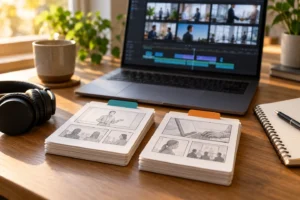
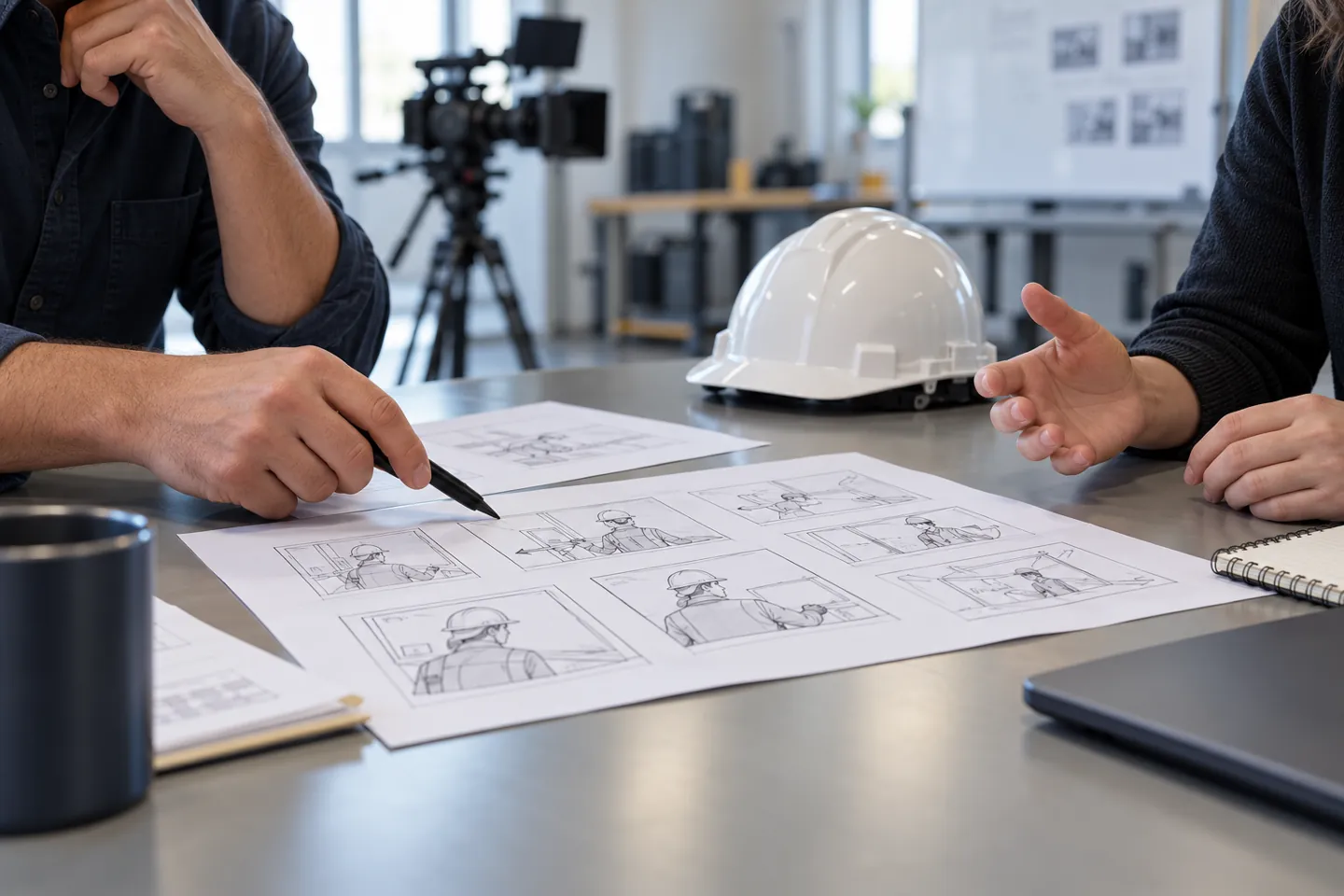
A script review should cover what viewers will see as well as what they will hear. Put the proposed demonstration, important detail and associated narration beside each other in the shot plan. Ask the reviewer what needs to remain visible for the explanation to be accurate.
Discuss whether a close view could remove essential context, whether an edit could imply a different sequence and whether a graphic could obscure information the viewer needs. These are questions for the responsible expert and production team to settle together before capture.
Use the corporate script review checklist to organize comments and approval. A visually attractive storyboard is ready only when the relevant reviewers understand and approve what it represents.
Agree the filming arrangements with the site team
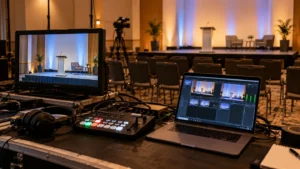
Coordinate the proposed location, participants, access and filming activity through the people responsible for the site. Ask them to identify restrictions and the arrangements needed for the planned demonstration. The production team should work within that approved plan.
Do not create a real hazardous event to obtain dramatic footage. If an illustrative sequence is needed, have the responsible team determine an appropriate approach and how it will be identified to viewers. A staged example should not be mistaken for an approved instruction simply because it was filmed at a real workplace.
Resolve practical filming questions during pre-production. Confirm who can stop or change the planned activity when conditions differ from what was agreed. A deadline is not a substitute for a workable site arrangement.
Plan language and accessibility review before recording
Ask who will verify specialist terms, captions, translated language and important on-screen information. A reviewer who understands the procedure may need to work with a separate language or accessibility reviewer. Identify the decision owner when their comments affect one another.
The media accessibility planning guidance from the World Wide Web Consortium helps frame requirements for the media and its player. Discuss the specific audience’s needs before recording, including important visual information that may need another form of explanation.
Connect the plan to caption delivery checks. Supporting files must match the exact approved edit. Correct wording in a script is not evidence that every uploaded language or caption version says the same thing.
Have experts review the edited demonstration
Give reviewers the cut they are actually approving, with a clear version identifier. Ask them to check the relationship between the action, narration, graphics and sequence. Editing for pace can change the apparent meaning even when every individual shot came from the approved filming plan.
Record comments against that version and identify who can confirm the correction. After a change, check any dependent parts of the film rather than assuming the correction affects only the named frame or sentence. Keep unresolved content questions separate from preferences about music or visual style.
Review the material in its intended viewing environment as well. Have the receiving team confirm the correct asset and supporting information are available. An approval of a local cut does not establish that the published copy is the same one.
Keep the video connected to the wider training process
Agree how viewers will find the current reference material and where they can ask questions. The employer’s responsible team should determine how the video fits with other instruction, practice and evaluation. A completed export or a recorded view does not by itself demonstrate that a worker understands the task.
Our employee onboarding video guide addresses audience and task planning for employees more broadly. For safety-related material, retain the specific expert review and training decisions rather than treating a generic onboarding film as interchangeable with the demonstration.
Who should approve a safety demonstration video?
Name the employer reviewers accountable for the source information and the depicted activity, alongside the people responsible for language, brand and delivery as needed. Ask who has final authority to resolve a disagreement. A production company can coordinate the review process, but a polished film does not replace the employer’s content and training decisions.
What happens when the procedure changes?
Have the content owner identify affected footage, narration, graphics and supporting files. Decide whether the current video should remain available while a correction is prepared. The responsible employer team must make that decision based on the actual change. Track the replacement through the published destination, not just the editor’s delivery folder.
Email brian@boltworldwide.com with the audience, approved source material, responsible reviewers and filming constraints. A useful production discussion starts with what the demonstration needs to explain and who can verify it.