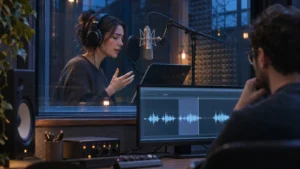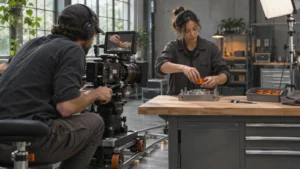

Schedule a table read when you need to hear how the script works between speakers. Schedule a camera rehearsal when the question depends on where people move, what they handle or what the viewer can see. Use both when the words and the action have to work together. Give each session a decision to resolve before adding it to the production schedule.
Use a table read to hear what happens between people
A table read brings the people speaking the lines together to read the script aloud. For a brand video, the useful part is hearing an exchange as it will be delivered. A line that makes sense on its own can sound repetitive after the previous speaker. A question can accidentally answer itself, or the reply may arrive before the audience has enough context.
Invite the speakers, the director or producer, and whoever can approve changes to the meaning. Ask someone to note the lines that need another pass. Listen once without stopping so you can hear whether the conversation flows. Then return to the specific moments where people stumble, explain something twice or disagree on what a term means. Send factual questions to the person who can resolve them.
For a single narrator reading straightforward copy, a short recorded read may provide the evidence you need. Bolt’s corporate video script review guide covers checking language, claims and timing before production. Add a group session when the interaction between speakers is what needs testing.
Use a camera rehearsal to check what the audience sees
Walk through the part of the scene that depends on a specific action or camera position. Identify where a speaker looks, when someone reaches for a prop and whether a key detail stays visible. The team may need the performer, director, camera lead and whoever can confirm the product action. Ask the producer what can be tested with a stand-in and what needs the actual person, prop or space.
For example, imagine two presenters demonstrating how a component snaps into a fixture. At the table, one presenter may clearly explain that the indicator changes when the part locks. In rehearsal, the other person’s hand could cover the indicator. The team can change the hand position, move the camera or add a closer view. The line can stay if the picture now lets viewers see what it describes.
A rehearsal can be a simple walk-through with a reference recording. When the decision involves a more complex camera move or a space that is difficult to imagine, a previsualization test can help the crew settle what to prepare. Ask the producer which parts of the rehearsal must match the planned setup for the result to be useful.
Book both when a revision in one affects the other
Use the table read first when you expect to revise the script. Confirm the intended meaning, then take the revised sequence into rehearsal. If the shot determines when a line should be spoken, keep the relevant people available to review the timing together. In the fixture example, the presenter can wait for the lock to engage before explaining what the indicator shows.
Avoid treating a naturally timed script read as the running time of the finished scene. A product action, reaction or transition can need room of its own. Use the read to estimate the spoken portion, then check the planned beats against the pictures. If the key action needs to remain visible without a cut, identify exactly where the uninterrupted shot begins and ends and rehearse that portion with the proposed framing.
Capture decisions the crew can use
After the table read, record the revised line, who approved it and which script version goes to the performers. After the camera rehearsal, record the change to movement, timing or framing and who will update the shot plan. If something remains unresolved, state who will decide and when the team needs the answer. Give both departments the same current reference so a change in one session carries through to the other.
When scheduling, ask what you need to have in hand at the end. A short list of decisions can justify the session and help the producer bring in the right people. If the remaining question is simply whether a sentence sounds natural, the recording can be enough. If it is whether an important action reads in frame, test that action with the intended view.
To discuss which rehearsal fits your script and planned shots, contact Bolt’s pre-production team at brian@boltworldwide.com.